When Neighbors Disagree: How Smithville Works It Out Without Walking Away
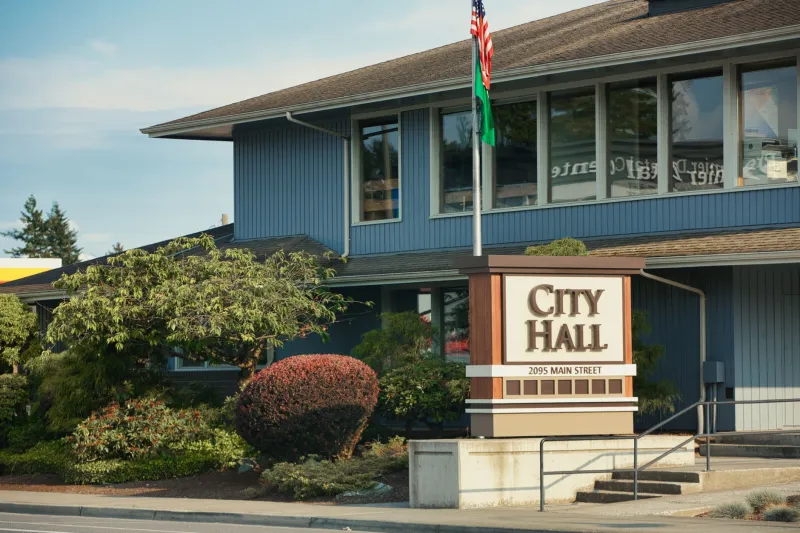
There's a particular kind of tension that only small towns understand. It's the moment you're sitting across the table from someone at a city council meeting — someone whose yard sign you despise, whose vote you opposed, whose decision you believe was flat-out wrong — and you both know that in three days, you'll be standing in the same checkout line at Henderson's Market.
You can't ghost your neighbor in Smithville. You can't block them on the street. So what do you do?
That question has played out here more times than anyone can count, and the answers say a lot about who this town is.
The Zoning Fight That Split a Block
A few years back, a proposal to rezone a stretch of Elm corridor from residential to light commercial quietly became one of the more heated local disputes in recent memory. Names have been changed here, but the shape of the conflict is familiar to anyone who was paying attention.
On one side: a property owner who wanted to convert a corner lot into a small commercial space, arguing it would bring foot traffic and tax revenue. On the other: a cluster of neighbors who worried about parking, noise, and what they called "the character of the street."
Planning commission meetings got testy. Letters circulated. At least one long-standing friendship went quiet for the better part of six months.
But here's what happened next: the rezoning passed in a modified form — smaller footprint, restricted hours, additional landscaping buffers. Neither side got everything they wanted. Both sides showed up to the ribbon cutting anyway.
"You just kind of have to," said one resident who'd been vocal in opposition. "You made your case. The process ran. And then you've still got to live here."
That reluctant acceptance — not forgiveness exactly, more like a pragmatic peace — shows up again and again in how Smithville handles its roughest moments.
School Board Tensions and the Art of the Long Game
If zoning fights are bruising, school board disputes are in a category of their own. Few things get Smithville residents more fired up than decisions affecting local schools, and in the past decade there have been no shortage of flashpoints: curriculum debates, budget cuts, administrator departures that not everyone agreed were voluntary.
What's notable isn't that these fights happen — they happen everywhere — but how they tend to resolve. Or not resolve, depending on who you ask.
One former board member, who asked not to be identified, described the experience of serving during a particularly divisive period as "like being in a pressure cooker that everyone in town could see through the glass."
"People would approach me at church, at my kids' games, at the diner. There was no off switch," she said. "But that also meant I couldn't be dismissive. I had to actually explain myself. Over and over. To real people with real kids."
That enforced accountability — the fact that decision-makers in Smithville are rarely more than two degrees of separation from the people affected by their decisions — functions as its own kind of check. It doesn't always produce better outcomes, but it does tend to produce more honest conversations.
Social Rifts: The Ones Nobody Talks About Out Loud
Not every conflict in Smithville ends up at a public meeting. Some of the deepest rifts are quieter ones — the kind that form around social fault lines and don't have an obvious resolution process.
Long-time residents and newer arrivals sometimes find themselves talking past each other in ways that are hard to name. Old money and working families have always coexisted here with varying degrees of friction. And in recent years, like everywhere else, political differences have had a way of calcifying into something more personal.
A local pastor who has lived in Smithville for over twenty years put it plainly: "The challenge in a small town isn't avoiding people you disagree with. It's figuring out how to keep showing up for each other anyway."
He described organizing a community meal a couple of years ago, shortly after a particularly contentious local election. He wasn't sure who would come, or whether people would be civil.
"Pretty much everyone came," he said. "And people were mostly fine. Not because the disagreements went away. But because the casserole was hot and the kids were running around and at some point you're just people again."
That's not a policy solution. It's not a framework or a facilitated dialogue. It's just proximity doing what proximity does — wearing down the edges over time.
What Smithville Gets Right (and Wrong)
It would be easy to romanticize all of this. To say that small towns like Smithville are somehow better at conflict resolution than their larger counterparts. That's not quite the truth.
Some disputes here fester for years. Some rifts never fully heal. There are grudges in Smithville that have been passed down a generation or two, stories about feuds so old that the original participants are gone and nobody can remember exactly how they started.
And the pressure of proximity cuts both ways. Yes, it forces accountability. But it can also force silence — people who swallow their real opinions because the social cost of saying them out loud feels too high in a place where everyone knows your name.
"Sometimes small-town harmony is just small-town conflict that went underground," observed one longtime resident who has watched more than a few disputes simmer without resolution.
But even accounting for all of that, there's something worth noting about how Smithville navigates its hardest moments. The town keeps showing up. People who fought publicly over a zoning map serve together on the same volunteer fire auxiliary. Neighbors who barely spoke for a year end up splitting a table at the Fourth of July festival because there's nowhere else to sit.
The Pressure of Proximity
Maybe the most honest thing you can say about how Smithville handles controversy is this: it doesn't always handle it well, but it almost always has to handle it somehow.
In a big city, you can lose yourself. You can move to a different neighborhood, find a different coffee shop, curate a social circle that never has to brush up against the people you disagree with. Smithville doesn't offer that kind of exit.
And so people negotiate. They compromise. They sit in uncomfortable silences and eventually, slowly, start talking again. Not because they've resolved every underlying tension, but because the alternative — permanent estrangement from half your community — is its own kind of loss that most people aren't willing to accept.
It's not a perfect system. It's not always fair, and it doesn't always produce justice. But it does produce something rarer than it sounds: a town that keeps choosing to stay in the room together, even when the room gets uncomfortable.
That might be the most Smithville thing of all.