Same Town, New Playbook: How Smithville's Youngest Residents Are Reshaping the Traditions They Grew Up With
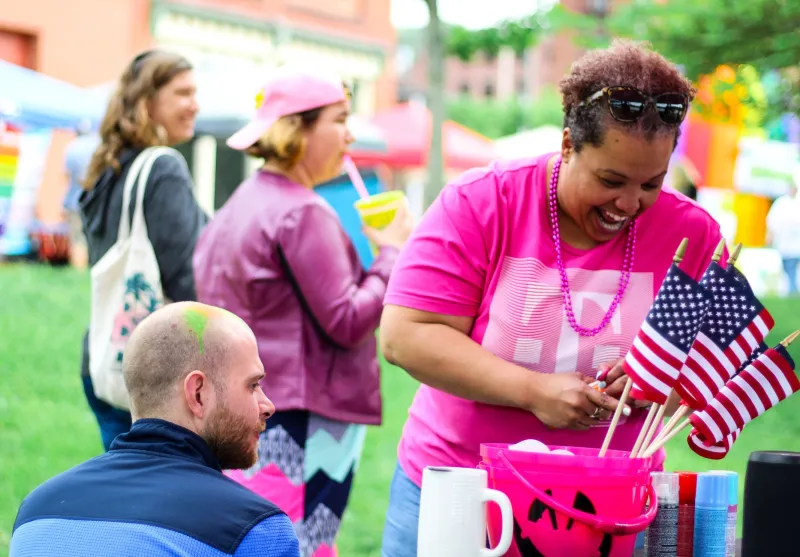
For as long as most people can remember, the Smithville County Fair meant the same things: funnel cake, the livestock judging tent, a pie contest that someone's grandmother was going to win, and a Ferris wheel that creaked a little more each year. It was a formula, and it worked. Nobody really questioned it.
That changed two summers ago when a handful of twenty-somethings — most of them Smithville-born, a few who'd moved back after college — showed up to the planning committee with a folder full of ideas. Some of those ideas landed. Some didn't. But the conversation they started is still going, and it's spreading well beyond the fairgrounds.
Across Smithville, a quiet but unmistakable shift is underway. Young adults and teenagers are stepping into the spaces where tradition lives — the church hall, the town square, the community center gymnasium — and asking a question that turns out to be more complicated than it sounds: What do we actually want to keep?
"We Didn't Want to Blow It Up. We Wanted to Make It Ours."
Marcus Delaney, 24, grew up attending the First Methodist Church's annual summer social. It was a potluck-style gathering that had been running in roughly the same format since the 1970s — folding tables, casserole dishes, a raffle, and maybe a local bluegrass act if someone knew someone. He loved it as a kid. As a young adult, he started to notice it drawing fewer and fewer people his age.
"It wasn't that people didn't care," Marcus says. "It was more like it felt like something you attended, not something you were part of."
So he pitched an idea to the church's social committee: keep the potluck, keep the raffle, keep the music — but add a service component. Attendees would bring a canned good or household item for the local food pantry alongside their dish to share. The raffle proceeds would go to a rotating community cause chosen by a vote at the event itself.
The first year they tried it, attendance was up noticeably. The second year, a group of high schoolers from the youth group ran the donation table entirely on their own.
"It still feels like the social I grew up with," says longtime member Dorothy Hines, 71. "But now I see young families there I hadn't seen in years. That's not a bad trade."
The Fair Gets a Remix
The county fair overhaul has been the most visible — and occasionally contentious — example of this generational renegotiation. When Priya Vasquez, 27, and her co-organizer Tate Burnham, 26, proposed adding a small-vendor marketplace to the fairgrounds featuring local artists, makers, and food trucks alongside the traditional agricultural exhibits, not everyone was enthusiastic.
"We heard a lot of 'that's not what the fair is supposed to be,'" Priya admits. "Which is fair — no pun intended. People have real memories attached to the way things were."
What helped, she says, was framing the additions as additions rather than replacements. The livestock competition didn't lose its tent. The pie contest kept its ribbon ceremony. The new marketplace was set up in a section of the grounds that had previously been used for overflow parking.
The result? Record attendance in year one. The funnel cake stand had a line that stretched halfway to the 4-H building. And the local maker who sold hand-stamped leather goods at the new marketplace is now a returning vendor who's become, in her own right, a piece of fair lore.
"My grandmother came and spent two hours at the marketplace," Priya says, laughing. "She bought a candle and a cutting board. I think she's converted."
When It's Not Just About Fun
Not every tradition being reimagined is a celebration. Smithville's annual Memorial Day ceremony at Riverside Park has historically drawn a respectful but small crowd — mostly veterans, their families, and a few civic regulars. Seventeen-year-old Jordan Pickett, a junior at Smithville High, thought it deserved a bigger audience.
Jordan worked with the school's history teacher and the local VFW post to develop a student-led portion of this year's ceremony, where high schoolers shared brief research presentations on Smithville residents who had served in various conflicts — some well-known, some nearly forgotten.
"There were people at that ceremony who didn't know their own neighbor had served in Korea," Jordan says. "That felt like something worth fixing."
VFW Post Commander Bill Okafor, 68, was skeptical when the idea was first floated. He's not skeptical anymore. "Those kids did their homework," he says. "And they brought their friends. That's the whole point — making sure this doesn't just become a ceremony that happens to the same twenty people every year."
What Gets Lost, What Gets Found
Not everyone is entirely at ease with the pace of change. Some longtime residents worry that layering new elements onto old traditions risks diluting what made them meaningful in the first place — that the more you add, the more the original thing gets buried.
Lorraine Chu, 63, who has organized Smithville's Christmas tree lighting ceremony for over a decade, puts it plainly: "There's a reason we do things the same way. Repetition is part of what makes it feel like home. When everything changes, it stops being a tradition and starts being just another event."
It's a tension that the younger organizers don't dismiss. Priya Vasquez acknowledges it directly. "We talk about this constantly," she says. "What's the load-bearing wall here? What can we touch and what do we leave alone? We don't always get it right."
What seems to be emerging in Smithville isn't a clean victory for either side of that tension — it's something messier and more honest. A negotiation, conducted in church halls and planning committee meetings and group chats, between people who love the same town and just have different ideas about how to show it.
The Thread That Runs Through All of It
Ask any of the young people driving these changes what they're ultimately after, and the answers sound remarkably similar: they want to feel like the traditions belong to them too. Not as recipients of something handed down, but as participants in something ongoing.
"My parents' generation built a lot of this," says Marcus Delaney. "I just want my generation to be part of the story too. Not to erase what came before — to add to it."
That might be the most Smithville thing about all of this. The town has always been built on the idea that community is something you make together, not something you inherit passively. The next generation seems to have gotten that memo. They're just writing a few new pages.