Stuck in the Middle and Just Fine With It: The Quiet Power of Being Smithville
There's a particular kind of frustration that comes with being a middle child. You're not the oldest, so you don't get the resources and the attention that come with being first. You're not the youngest, so nobody's fussing over you either. You're just... there. Competent. Capable. Quietly doing the work while everyone looks past you toward something more interesting.
If Smithville were a person, it would recognize that feeling immediately.
Too Small to Matter, Too Big to Be Charming
When state agencies hand out grants, they tend to think in two directions: major metro areas that drive economic output, and small rural communities that need a lifeline. Smithville fits neither profile cleanly. We've got a functioning downtown, a school system that works, a tax base that pays its bills. On paper, we look like we're doing fine.
And that's precisely the problem.
"We don't qualify for a lot of rural development funding because we're technically not rural," says one longtime member of the town's planning committee, who's spent years navigating state application processes. "But we're also not big enough to compete with the cities for the other funding streams. We just kind of fall through the gap every single time."
It's a pattern residents describe across almost every sector. Business incentives flow toward high-population corridors or distressed rural zones. Cultural grants chase either big audiences or deeply underserved communities. Infrastructure dollars follow the squeaky wheel, and Smithville — functional, steady, not quite dramatic enough to make headlines — rarely squeaks loud enough.
What the Map Doesn't Show
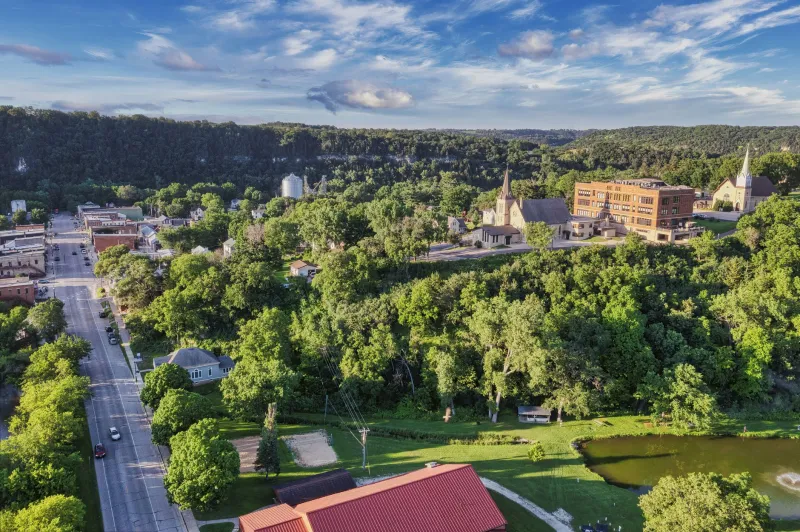
Drive through Smithville and you'll see a town that reads, at first glance, as unremarkable. There's a main street that's seen better decades. There are subdivisions that went up fast in the early 2000s and haven't changed much since. There's a regional chain or two that showed up when the population crossed a certain threshold and hasn't expanded since.
What the map doesn't show is the web of connections underneath all of that.
Because here's the thing about being overlooked: it forces people to rely on each other. When the state isn't investing in your town's revitalization, your neighbors do it. When national retailers pass you over, local businesses fill the gap — imperfectly, sometimes frustratingly, but with a kind of investment that doesn't show up on a corporate balance sheet.
"People in Smithville know each other," says a woman who moved here from a mid-sized city about eight years ago and has watched the dynamic from the outside. "Not in a nosy way. In a real way. I had a water heater go out on a Sunday, and by Monday morning I had three different people texting me recommendations, one of whom had already called ahead to the plumber for me. That doesn't happen where I came from."
That density of informal connection — the kind that only develops when people don't have an abundance of institutions to lean on — is something Smithville has built almost by accident.
The Invisible Infrastructure
Larger towns have layers of formal support systems: economic development offices with full-time staff, arts councils with real budgets, civic organizations that can hire professionals. Smithville has some of that, but not enough to cover everything. So the gaps get filled by volunteers, by informal networks, by the kind of person who just shows up and does the thing because nobody else is going to.
That's not always romantic. It can mean burnout. It can mean the same dozen people carrying too much weight for too long. Ask around and you'll hear that frustration too — the exhaustion of being a town where civic participation isn't optional if you actually care about outcomes.
But there's a flip side. In a larger city, the average resident has almost no meaningful leverage over how things get done. In Smithville, one organized group of neighbors can genuinely change a decision. One well-attended town meeting can shift a vote. The scale that makes us easy to overlook from the outside is the same scale that makes individual voices matter more on the inside.
What Residents Wish Outsiders Understood
We asked around — at the diner, at the community center, outside the library on a Tuesday afternoon — and the answers were surprisingly consistent.
"I wish people understood that we're not waiting to become something else," said one man who grew up here, left for college, and came back to raise his kids. "Smithville isn't a city in progress. It's not a rural town trying to hold on. It's its own thing, and it works, and I think people assume we must be disappointed that we're not bigger."
That assumption — that towns like Smithville are somehow aspirational failures — might be the most persistent misconception. The idea that any community not trending toward urban density or leaning into rural authenticity must be stuck, stagnant, waiting for something better to come along.
The residents here tend to see it differently. The in-between isn't a waiting room. It's a destination.
"You can actually afford to live here," pointed out a younger resident, a teacher in her early thirties who looked at housing prices in the nearest metro and turned around fast. "You can own a house. You can know your neighbors. You can be involved. There's something to be said for a place where you can actually participate in your own community."
The Blind Spot Has a Silver Lining
Being off the radar has its costs — real ones, in dollars and development and attention. Smithville has fought for resources it deserved and lost more times than residents care to count. That's not a small thing, and it shouldn't be glossed over.
But the same invisibility that costs us has also protected us from some of what's happened to more prominent towns. The rapid gentrification that's displaced longtime residents in trendier small cities hasn't touched us the same way. The outside investment that arrives with strings attached and reshapes a town's character before locals can react — we've seen less of that too.
Smithville has had to build its own identity from the inside out. Nobody handed it to us. No branding consultant came in and told us what we were. The community that exists here is one that residents constructed themselves, through decades of showing up for each other in the absence of anyone else showing up for them.
That's not nothing. In fact, it might be everything.
If you ask most people in Smithville what makes this place worth staying in, they won't point to an amenity or a statistic. They'll tell you about a person — a neighbor, a coach, a shop owner who remembered their name. They'll describe the kind of place that doesn't make the listicles or the economic development brochures, but that quietly holds people together anyway.
The middle child, it turns out, is often the one keeping the whole family running. Smithville has known that for a long time. The rest of the world is still catching up.