Why They Came Back: The Quiet Revival Happening Right Here in Smithville
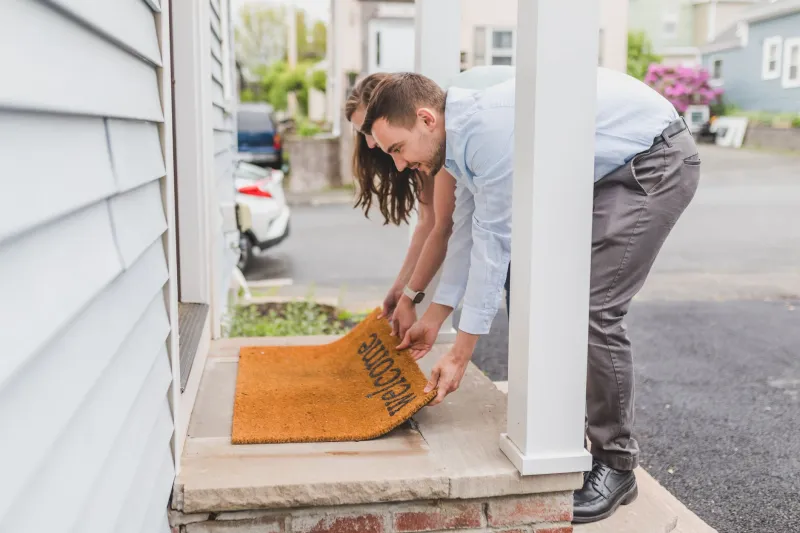
There's a moment Marcus Delray describes that a lot of people around here seem to understand. He was sitting in gridlock on I-95, somewhere between his overpriced Baltimore apartment and a job that paid well but didn't mean much, when his phone buzzed. It was his mom, calling from Smithville to say the old Hennessey place two streets over had just gone on the market.
"I told her I'd think about it," Marcus says, laughing. "I was back home signing papers inside of a month."
That was three years ago. Today, Marcus runs a small bookkeeping practice out of his home office and coaches youth soccer on Saturday mornings. He doesn't miss the commute. Not even a little.
His story isn't unique. Across Smithville, a quiet but unmistakable shift is underway. Young professionals, young families, and even a handful of retirees who once scattered to bigger cities are finding their way back — or, in some cases, discovering Smithville for the very first time and deciding to plant roots.
The Numbers Behind the Feeling
It's hard to pin down exactly when the tide started to turn, but locals and civic leaders alike are noticing the signs. Enrollment at Smithville Elementary is up for the second consecutive year. New business licenses filed with the town have ticked upward. The Saturday farmers market, which a few years ago felt like it might quietly fade away, now runs out of vendor space.
Smithville's town clerk, Diane Okafor, has been processing paperwork for incoming residents at a pace she describes as "noticeably busier than it used to be." She's careful not to overstate it — this isn't a boom, and nobody's pretending otherwise. But the direction of the trend is hard to argue with.
"We're seeing people in their late twenties, early thirties," she says. "A lot of them have kids or are thinking about it. They want something different from what they had."
What 'Different' Actually Looks Like
Ask the people who moved here — or moved back — what they were looking for, and the answers vary in the details but rhyme in the spirit. Affordability comes up a lot. So does safety. But more than anything, people keep coming back to the same word: community.
Leila and Tomas Varga relocated from Chicago eighteen months ago with their two daughters, then four and six years old. Leila had grown up in a town similar to Smithville and spent her twenties convincing herself she'd outgrown that kind of place. A global pandemic and a couple of sleepless years later, she wasn't so sure.
"We had neighbors in Chicago we never once had a real conversation with," Leila says. "We've been here a year and a half and I already feel like I know half the town. My kids know the people at the hardware store by name. That's not nothing."
Tomas, who works remotely in software development, adds that the financial math wasn't even close. They sold their two-bedroom condo and bought a four-bedroom house with a yard for less money. "It felt almost suspicious at first," he admits. "Like we were missing something."
They weren't.
What It Means for the Town Itself
Smithville has always had its charms, but it's also had its challenges — the kind that come with being a small town in a world that seemed to be moving somewhere else. Storefronts sat empty. Young people left for college and didn't come back. School budgets got tight.
The reverse migration, even at its current modest pace, is starting to change some of that calculus.
Principal Rhonda Castillo at Smithville Middle School says she's noticed not just more students, but more engaged parents. "We've had new families come in and immediately volunteer, join the PTO, show up to school board meetings. That energy is contagious."
Locally-owned businesses are feeling it too. Carla Metz, who opened her specialty kitchen goods shop on Broad Street about two years ago, says she took a leap of faith on Smithville when friends told her she was being naive. "They said, 'Nobody shops local anymore.' But I kept seeing new faces. People who seemed genuinely excited to support something homegrown."
She's not getting rich, she'll tell you that plainly. But she's busy, and she's staying.
Remote Work Changed the Equation
It would be impossible to tell this story without acknowledging the obvious: remote work cracked open a door that had been shut for a long time. When your job no longer requires you to live within commuting distance of a downtown office tower, the whole map changes. Suddenly, Smithville isn't a compromise. It's a choice.
Marcus Delray, the bookkeeper who came home to the Hennessey place, sees this clearly. "The city used to be where the opportunity was. Now the opportunity is wherever you are. That's a big deal for towns like this one."
Not everyone who moves to Smithville works remotely, of course. Some have found local employment, started businesses, or scaled back their careers intentionally in exchange for a different quality of life. But the remote work wave gave a lot of people permission to even consider the option.
A Renaissance, Carefully Defined
Nobody around here is getting carried away. Smithville isn't about to become something it isn't, and most residents seem to prefer it that way. The appeal of the place is bound up in exactly what makes it small — the familiarity, the pace, the fact that you can run into your kid's teacher at the grocery store and it doesn't feel weird.
The challenge, a few longtime residents quietly note, is making sure growth doesn't gradually sand away the very things that made people want to come here in the first place. It's a tension every small town navigating a revival has to sit with.
But for now, the feeling in Smithville is less anxiety and more cautious optimism. People are showing up. They're staying. They're coaching soccer and opening shops and filling seats at school board meetings.
Leila Varga puts it simply: "We weren't running away from the city. We were running toward something. And we found it here."
That might be the most Smithville thing anyone's said in a while.